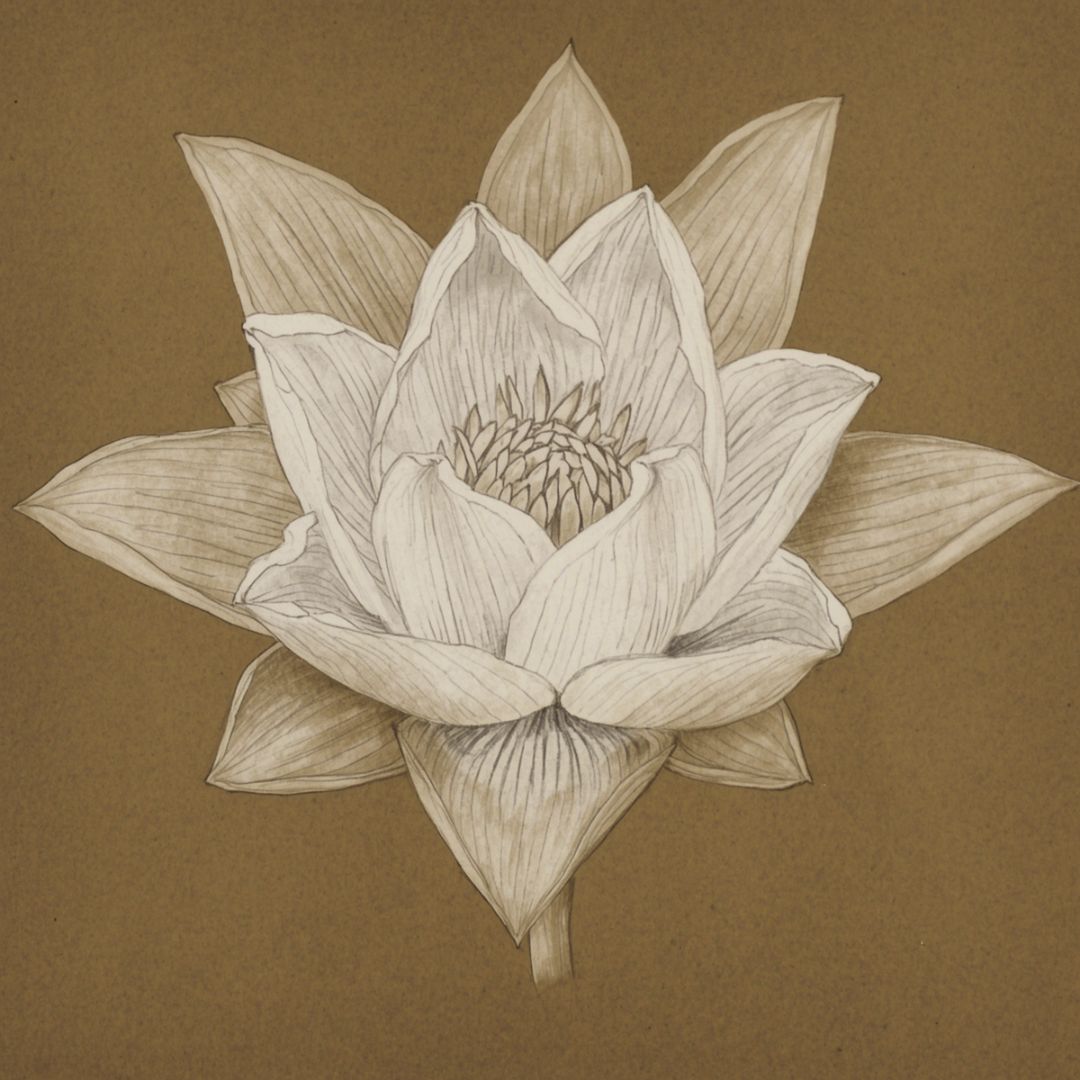
The Rakshasa of the Southern Terai: Demon, or Degraded Memory of Something Real?
Fictional Nature Field Journal — Terai Region, Nepal
“There are two kinds of darkness in this world. There is the darkness above the clouds, which is empty and clean and belongs to the snow. And there is the darkness under the canopy, which breathes. The one above ignores you. The one below is always deciding.” — Attributed to Dil Bahadur Chaudhary, Tharu elder, Bardiya District, collected oral account, 1971
- Classification Status: Active Tradition Entity — Dual-Category (Theological Construct and Possible Ecological Memory)
- Region of Presence: Terai Arc, Nepal — principally Chitwan, Bardiya, Shuklaphanta, and Parsa districts
- Elevation Range: 60 – 900 metres above sea level
- Primary Source Texts: Rigveda (Hymn 87, Tenth Mandala), Ramayana, Mahabharata, Markandeya Purana
- Local Tharu Designation: Jangali Raksha (“the jungle’s claim”)
- First Sanskrit Reference: Vedic period, estimated 1500–1200 BCE
Climb down from the mountains. Come down through the rhododendron forests and the cloud belt and the terraced fields and the river valleys. Keep descending until the air becomes warm and then thick and then something you have to push through rather than breathe. Keep going until the sal trees close above you and the light reaching the ground has been filtered through so many layers of canopy that it arrives greenish and diffuse, like something submerged. Keep going until you hear a tiger mark its territory in the dark somewhere to your left, and the sound is casual in a way that nothing that large should be.
You are now in the Terai.
This is not the Himalayas’ vertical drama. This is something horizontal and patient and extraordinarily old. The Terai is a thin strip of subtropical lowland running along Nepal’s entire southern border, a continuation of the vast Indo-Gangetic Plain — one of the most ecologically dense habitats remaining in Asia. Its national parks, Chitwan and Bardiya among them, protect the last significant populations of one-horned rhinoceros, Bengal tiger, and Asian elephant on the subcontinent’s northern edge. The forest floor here is a competition between things trying to consume each other. The rivers flood annually and rearrange the landscape. The monsoon turns paths into rivers. Something dies and is eaten completely within hours.
The Meh-Teh watches from the high places. The Rakshasa is already in the room with you.
Part I: The Oldest Name for What Hunts in the Dark
The Rakshasa is one of the oldest named entities in Hindu cosmology — not folklore in the casual sense, but theology, written into the Vedic texts that underpin one of the world’s major religious traditions. The Rigveda — composed somewhere between 1500 and 1200 BCE, making it one of the oldest religious texts in continuous use — contains a specific hymn, the 87th of its Tenth Mandala, devoted entirely to the destruction of Rakshasas. That you needed a formal hymn to destroy them tells you something about their status in the earliest recorded imagination.
The origin story comes in multiple versions, each of which tells you something different about what the Rakshasa represents. In the Markandeya Purana, Brahma creates the universe in stages: gods, ancestors, humans. Then, exhausted and hungry, he creates in the night a body born of passion and darkness. Creatures emerge from this body, ravenous. Some cry out “Rakshama!” — “Let us protect!” Others cry “Yakshama!” — “Let us consume!” Those who cried to protect became the Yakshas, forest spirits of ambiguous nature. Those who cried to consume became the Rakshasas, named forever after Brahma’s own terrified response to his creations: “Rakshama!” — “Protect me!”
There is something worth sitting with in this etymology. The word for the demons and the cry for protection from them are the same word. The Rakshasa is, in the oldest version of the story, what is born when the act of creation reaches its limit — the point at which the universe makes something that immediately turns on its maker.
In subsequent texts — the Ramayana, the Mahabharata — Rakshasas become more specific. They have kings. They have kingdoms. The most famous of them is Ravana, ten-headed ruler of Lanka, whose abduction of Sita sets the Ramayana in motion. But Ravana is a peak achievement, a Rakshasa refined and elaborated over millennia of literary tradition. The Rakshasa of the Terai is something older and less refined. It has not been polished by a thousand years of epic poetry. It has been sitting in the jungle, doing what it does, while the epics were being written about its more famous cousins in another country.
“Ravana is what happens when you give a Rakshasa time and ambition. What is in our forest has had neither. It has had only hunger and patience. These are worse.” — Attributed to Pandit Surya Prasad Mishra, Chitwan, 1988, collected oral account
◈ DOSSIER FILE: THE RAKSHASA
Sylvestris Rakshasii Teraiensis — “The Jungle’s Own”
[Darkmyths Classification: Confirmed Theological Entity, Category I — Active Tradition with Physical Encounter Record]
PHYSICAL PROFILE
The Rakshasa of the Terai oral tradition diverges meaningfully from the Sanskrit literary tradition and from the Western popular understanding of the creature as a ten-headed warlord. The local tradition is not interested in Ravana. It is interested in something that comes from the far side of the river at night and has never been interested in kingdoms or glory.
Tharu oral accounts — drawn from the indigenous people of the Terai who have lived in this jungle for centuries, developing a resistance to malaria that still baffles epidemiologists, building their lives in direct relationship with one of the most dangerous ecosystems in Asia — describe the Terai Rakshasa as bipedal but not consistently so. The creature moves on two legs when it wants to be seen and on four when it wants to be fast. This detail is consistent across accounts separated by geography and generation, and has no parallel in the Sanskrit literary tradition, suggesting it is an independent observation rather than imported theology.
The body is large — taller than a man when standing, broader than a man across the chest and shoulders. The skin or hide is described variously as dark and smooth, like something that has spent time in river water, or rough and patchy, like bark. The eyes are the most consistent element across accounts: described as generating their own light, amber or orange, visible at a distance in the dark under the canopy. Not reflective like an animal’s tapetum lucidum, but self-illuminating in the manner of something that has no interest in concealment.
The face is the detail that disrupts any comfortable comparison to known Terai megafauna. It is described, with remarkable consistency, as “almost human and then not” — the proportions approximately correct until you reach some specific feature that is wrong. Most accounts name the mouth: too wide, or too full of teeth arranged in a way that doesn’t follow the mammalian pattern. Some accounts describe a smell, which they associate with the creature rather than with a carcass or marking site: sweet and organic, like something fermenting. Like the jungle itself, concentrated.
BEHAVIOUR AND TEMPORAL ECOLOGY
The Terai Rakshasa operates almost exclusively between dusk and the three hours before dawn — what the Tharu call “the tiger’s hours,” a phrase that applies both to the Bengal tiger’s peak activity window and to the period in which the forest’s stranger presences are most mobile. This temporal specificity is significant: it suggests either genuine nocturnal behaviour in a physical entity, or a cultural mapping of the night’s danger onto a single anthropomorphised form.
Darkmyths researchers argue the distinction is less important than it first appears. Whether the Rakshasa of the Terai is a physical creature with nocturnal habits or a cultural container into which centuries of genuine nighttime encounters with real predators have been poured, the result in human behaviour is identical: the Tharu do not go into the deep forest between dusk and dawn without specific ritual preparations. That behaviour is adaptive regardless of its ontological basis.
The Jangali Raksha variant — the protective or territorially neutral version found in western Terai accounts, particularly around Bardiya — represents a tradition distinct from the consuming demon of the Sanskrit texts. In Bardiya’s Tharu communities, the jungle’s dark guardian is not always malevolent. It is portrayed as the enforcer of the forest’s terms: those who take more than the jungle offers, who kill carelessly, who disturb the river spirits without acknowledgement, attract its attention. Those who observe the old protocols are, at most, observed in return.
This is structurally identical to the Meh-Teh’s relationship with the Sherpa communities of the Khumbu. Different environment, different culture, different name — the same fundamental idea: the wild places have custodians, the custodians respond to conduct, and the appropriate response to a custodian is acknowledgement rather than fear.
THE MONSOON PHASE
Darkmyths original field theory, based on the concentration of Terai Rakshasa accounts in the months immediately preceding and following Nepal’s monsoon season (June–September), proposes what we have termed the Monsoon Phase: a period of heightened entity activity that corresponds to the ecological upheaval of the flood season.
During the monsoon, the Terai’s rivers break their banks and rewrite the landscape. Animals are displaced. The boundaries between different habitat zones — riverine forest, sal forest, grassland, human settlement margin — dissolve temporarily. In this period, the Tharu accounts of Rakshasa activity spike dramatically. Whether this reflects actual movement of a physical entity through displaced habitat, or simply the increased psychological pressure of a season in which every boundary fails and the jungle genuinely does come closer, is a distinction the tradition makes no attempt to draw.
What the tradition does draw, precisely, is the ritual boundary. During the monsoon, the practice of “feeding the dark” — leaving prepared food at the jungle margin before nightfall — is maintained most rigorously. The food is not an offering in the devotional sense. It is a territorial marker in the social sense: “We know you are there. We are acknowledging you. We are not pretending otherwise.”
VARIETIES AND HIERARCHY
Unlike the Meh-Teh, which Tharu tradition describes as essentially unitary — one kind of entity with individual variation — the Terai Rakshasa tradition acknowledges a hierarchy. At its base are the Pishacha, small and opportunistic, associated with cremation grounds and river margins, probably the oldest layer of the tradition. Above them are the Kravyad — “flesh-eaters” — the standard-form Rakshasas of the jungle interior. At the top of the local hierarchy is the entity the Tharu call by a name that translates approximately as “the one the tiger defers to” — something encountered so rarely that only four accounts in the Darkmyths collection claim direct sighting, and all four describe the same thing: a still figure at the edge of a clearing, watching the forest with an expression of ownership so complete it makes the observer feel that they are the anomaly, not the figure.
STATUS: Category I. Encounter accounts ongoing. Monsoon-phase activity consistent. Reclassification to Category 0 (Active Physical Presence) under review pending further Tharu community consultation.
Part II: The People Who Have Always Known
The Tharu are the original inhabitants of the Terai — the people who were there before the sal forests were cleared, before Chitwan was gazetted as a national park, before the roads came, before the anti-malaria campaigns of the 1950s opened the lowlands to mass settlement from the hills. For most of their history, the Terai’s malaria kept the outside world out and the Tharu in, developing a relationship with a jungle that would have killed anyone without their specific genetic adaptations and accumulated knowledge.
They are not, in the way this phrase is sometimes used, “people who live close to nature.” They are people who live inside nature, in the technical sense that the boundary between human settlement and jungle in traditional Tharu architecture is deliberately porous. Traditional Tharu longhouses extend into the forest margin. The jungle is not outside — it is adjacent, acknowledged, maintained in a specific relationship that requires active tending.
The Rakshasa in Tharu tradition is therefore not an invader from outside. It is a permanent resident of the adjacent. It is what lives past the last torchlight, in the part of the forest the longhouse doesn’t reach. Not beyond the wall, because there is no wall — beyond the attention, which amounts to the same thing.
“My grandmother would not say its name at night. Not because the name would call it. Because the name would acknowledge it, and if you acknowledge something in the dark, you are telling it that you know it is real. She said: only acknowledge real things when you are ready to deal with what being real means.” — Phulmaya Chaudhary, 34, Tharu community, Chitwan buffer zone, 2016
The Tharu ritual ecology around the Rakshasa is elaborate and internally consistent in ways that suggest considerable antiquity. There are specific plants that mark safe boundaries. Specific sounds — made by striking particular wooden implements in a particular rhythm — that are used when entering forest sections known to be active. Specific preparations for the bodies of those who die in the jungle, which differ from preparations for those who die in the village, and which are explicitly framed as preventing the deceased from becoming available to the entity.
A Tharu jhakri — a shaman, practitioner of the old forest medicine — who agreed to speak with Darkmyths researchers near Sauraha in 2019 described the Rakshasa not as a creature to be feared but as a condition to be managed. “It is not angry at you. It is not peaceful with you either. It simply has requirements. You meet the requirements, the jungle is open. You ignore them, the jungle closes around you. That is not malice. That is just how the jungle works.”
◈ DOSSIER FILE: DIET AND PREY ECOLOGY
What the Jangali Raksha Eats — and What That Tells Us
[Darkmyths Field Notes — Terai prey ecology and Tharu account synthesis]
The question of what the Terai Rakshasa consumes is where the tradition becomes most interesting from an ecological standpoint, and where the “degraded memory” hypothesis gains its most compelling traction.
PRIMARY PREY: THE ONE-HORNED RHINOCEROS (Rhinoceros unicornis)
The Indian one-horned rhinoceros is the Terai’s most ancient-feeling resident. An adult male can reach 2,500 kilograms — heavier than any land predator in Asia, heavier than most things that have ever walked on this continent. Their skin hangs in heavy folds that give them the appearance of armoured vehicles. They have survived in the Terai since the Pleistocene. Chitwan National Park contains the world’s second-largest population; Bardiya’s numbers have risen sixfold since 2009. They are, in every practical sense, a Pleistocene relict species living in the present.
In Tharu tradition, the rhinoceros is described in a specific relationship with the Rakshasa — not as prey in the modern predator-prey sense, but as a creature the Rakshasa tested. The tradition holds that when a rhinoceros charges and does not stop, it has encountered something that held its ground. The only thing in the Terai capable of holding ground against a charging rhinoceros is, in the Tharu account, the Rakshasa.
No modern predator in the Terai — not the Bengal tiger, not the leopard, not the sloth bear — will hold ground against a charging adult rhinoceros. The tradition is describing behaviour that has no living referent. This is what “degraded memory” sounds like.
SECONDARY PREY: THE GAUR (Bos gaurus)
The gaur is the largest bovine on earth. An adult male stands nearly two metres at the shoulder and can reach 1,500 kilograms. Chitwan’s gaur population has grown steadily to nearly 400 animals. No living predator in the Terai reliably takes adult gaur. Tigers take calves and old or weakened individuals, with ambush and throat-clasp. The tradition describes the Rakshasa taking adult gaur in confrontation, which describes nothing that currently exists.
TERTIARY: HUMAN-ADJACENT BEHAVIOUR
Every Rakshasa tradition across cultures includes human consumption — the “man-eater” attribute that defines the entity in Sanskrit literature as nri-chaksha (man-gazing, seeing humans as prey) and kravyad (flesh-eating). In the Tharu tradition, this is not the primary characteristic but a consequence of transgression: the Rakshasa does not hunt humans the way it hunts gaur. It takes humans who have violated the jungle’s protocols. This is a meaningful distinction — it frames the entity as a consequences-engine rather than an indiscriminate predator, which is a more sophisticated ecological model than the Sanskrit texts’ simple “man-eater” classification.
The Tharu maintain that no one who follows correct forest protocols has been taken. Darkmyths makes no claim to assess this empirically. We note that the Tharu have lived in direct, daily contact with an ecosystem containing Bengal tigers, leopards, king cobras, gharial crocodiles, and Asian elephants for centuries, with community survival rates that suggest their protocols are extremely well-calibrated to the actual risks of their environment. That the Rakshasa protocols are maintained alongside and equivalent to the tiger protocols is information.
Part III: The Memory That Refuses to Degrade
Here is the degraded memory hypothesis stated plainly: The Rakshasa tradition of the Southern Terai, stripped of its theological elaboration, describes a large, semi-bipedal, predominantly nocturnal predator capable of confronting and taking rhinoceros-scale prey, resistant to tiger-level threat, operating in lowland subtropical forest, with a range corresponding exactly to the historical range of the Terai ecosystem.
Gigantopithecus blacki — the largest primate ever to have walked the earth — inhabited South and Southeast Asia until approximately 300,000 years ago, possibly as recently as 100,000 years before the present. It stood an estimated three metres tall. Its range included the Indo-Gangetic lowlands. It went extinct for reasons still debated — climate change, habitat shift, possibly competition with Homo erectus, who was present in the same regions. But 100,000 years is recent in evolutionary time. It is not remote enough that cultural memory — transmitted through 4,000 generations of human presence in the same environment — could not have retained a trace.
This is not a claim that the Terai Rakshasa is a surviving Gigantopithecus. It is a claim that the tradition could encode an ecological memory of a creature that shared the lowland forest with human ancestors, was large and dangerous enough to constitute a significant predatory threat, and has left an impression in the cultural record that theological elaboration has not entirely obscured.
The Sanskrit texts inherited the Rakshasa from an older, pre-literary tradition and gave it narrative function: kingship, politics, epic warfare, the kidnapping of divine women. The Tharu tradition did not receive these elaborations. It held onto the older thing.
“There are demons in the books. These are the educated ones, the ones who learned language and strategy and ambition. The ones in the forest never went to school. They are still what they were at the beginning.” — Attributed to Bal Krishna Tharu, Jhakri, Bardiya buffer zone, 2019
◈ DOSSIER FILE: THE TERRITORIES
Three Jungle Margins — The Rakshasa’s Known Range
[Darkmyths Geographic Profile — lowland ecology, report density, Tharu territorial tradition]
TERRITORY I: CHITWAN
Chitwan National Park occupies 932 square kilometres of the central Terai, designated a UNESCO World Heritage Site in 1984 for its exceptional biodiversity. It contains eight distinct ecosystem types, including seven forest types, six grassland categories, and five wetland habitats. Its faunal diversity — 50 mammal species, 526 bird species, 49 reptile and amphibian species — makes it one of the most ecologically concentrated areas in Asia. The park shares a border with India’s Valmiki National Park to the south, creating a continuous wildlife corridor of significant size.
For the Terai Rakshasa tradition, Chitwan is old ground. The communities of the Chitwan buffer zone — Tharu villages that predate the park by centuries — maintain the most internally consistent and elaborated Rakshasa ritual complex in Nepal. The feeding the dark practice is most structured here; specific trees at the jungle margin are marked with particular arrangements of mahua blossom and river clay that are renewed seasonally. The jhakri tradition here includes specific drumming sequences — described by practitioners as “the knock, not the invitation” — used when working at the forest edge after dusk.
The Narayani River, which runs through the park’s core, is considered in Tharu tradition to be the Rakshasa’s preferred corridor during the Monsoon Phase. When the Narayani floods and its banks disappear, the accounts say, the entity moves with the water — not into the village, but along the flood margin, marking what the river temporarily claims as jungle territory. After the monsoon recedes, the forest pulls back and so does the presence.
TERRITORY II: BARDIYA
Bardiya is the Terai as it was before the roads. Nepal’s largest national park is 968 square kilometres of the western lowlands, less visited than Chitwan, more severe in its untouched quality — what one long-term field researcher described as “Chitwan thirty years ago.” Its tiger population has grown sixfold since 2009; its rhinoceros numbers have recovered steadily under strict protection. The Karnali River, which forms its western boundary, is one of Nepal’s longest and most powerful — draining the western Himalaya, flooding massively each monsoon, carrying enough force to move boulders.
The Bardiya Rakshasa tradition is where the Jangali Raksha protective variant is strongest. Here the entity is not primarily a threat but a territorial agreement. The Tharu communities adjacent to Bardiya’s buffer zone maintain that the park’s extraordinary conservation success — its wildlife recovery rates are among the best in Asia — is in part a function of the jungle’s self-maintenance, of which the Rakshasa is the enforcement arm. This is not a claim Darkmyths endorses as ecology. It is a claim we record as tradition, noting that the communities making it have maintained harmonious coexistence with Bengal tigers and one-horned rhinoceros for centuries without fencing.
TERRITORY III: THE RIVER MARGINS — KARNALI AND NARAYANI SYSTEMS
The most active Rakshasa encounter tradition in modern accounts is not within either national park but along the riverine corridors that connect them — the ungoverned forest margins where the park meets the agricultural plain, where night fishing communities work in the dark near water, where the territorial boundaries of the formal conservation areas dissolve and the jungle continues on its own terms.
These margins are where human-wildlife conflict in Nepal is most concentrated: where tigers take livestock, where elephants raid crops, where the rhinoceros — once nearly extinct, now recovered — wanders into settlements at night. The Rakshasa tradition is most active precisely here, in the zones where the real and the mythological are most difficult to separate, where something genuinely large and genuinely nocturnal genuinely does move through the dark, and where the question of which large nocturnal something is responsible for a given sound or track or absence has never been entirely settled.
Darkmyths does not resolve this ambiguity. We document it.
◈ DOSSIER FILE: FLORA OF THE JUNGLE FLOOR
The Plants That Mark the Rakshasa’s Ecology
[Darkmyths Botanical Profile — species of significance in Terai Rakshasa tradition and jungle ecology]
SAL FOREST (Shorea robusta)
The sal tree is the Terai’s architectural fact. It covers seventy percent of Chitwan’s forest floor, forming a canopy that reduces ground-level light to a permanent dusk even at midday. Sal wood is dense and nearly rot-resistant — it has been used for temple construction and railway ties alike. The trees grow tall and relatively unbranched for most of their height, producing a forest interior that feels columnar, ecclesiastical, and fundamentally different from the tangled growth of the jungle margins.
In Tharu tradition, the sal forest is the Rakshasa’s primary interior territory. The canopy keeps the ground dark; the trees’ spacing allows something large to move through without breaking branches. There is a specific Tharu prohibition on entering deep sal forest — away from established trails — between dusk and dawn that is articulated not as fear but as courtesy: “The dark between the sals belongs to something else after sunset. You are welcome back at dawn.”
The sal tree’s relationship to the entity is not adversarial or protective — it is simply structural. The forest is the condition of the tradition. Remove the sal forest and the entity has nowhere to be.
THE PALASH (Butea monosperma) — “The Bleeding Tree”
The Palash flowers in February and March, before the monsoon, before the new leaves come. It flowers on bare branches — no foliage, just clusters of deep orange-red blooms that give the tree the appearance, across a riverbank or forest margin, of being on fire. The Palash is sacred in Hindu tradition, associated with Agni the fire god, used in religious ceremonies. Its sap is a deep, viscous red that bleeds from cuts in the bark in a way that requires no imagination to find disturbing.
In the Terai Rakshasa tradition, the Palash marks the entity’s territorial boundaries — specifically, the places where the jungle’s authority over the human world is most complete. Old Palash trees at the forest margin are the preferred sites for feeding the dark preparations. The red flowering — described in Tharu accounts as “the jungle’s fire, the warning fire, not the warming fire” — is considered a seasonal announcement of the entity’s active period beginning.
Darkmyths’ original contribution to the botanical lore: the Palash flowers precisely at the end of the dry season, when prey animals are most concentrated at remaining water sources, when the forest is most stressed and its territorial logic most clearly visible. The timing of the announcement and the timing of the ecological pressure are the same. Whether the tradition arrived at this coincidence by observation or by the same kind of accumulated ecological knowledge that underlies all good folklore, the synchronisation is exact.
MAHUA (Madhuca longifolia)
The mahua tree is the Tharu’s most intimate plant relationship — a source of food, fuel, fermented drink, and medicine that has shaped their material culture more than any other single species. The flowers fall at night in late spring, thick and pale and with a sweet, heavy fragrance that carries across considerable distance. They are collected at dawn, fermented into mahua wine, dried for food, pressed for oil. The tree provides the fundamental calendar of Tharu life.
In the ritual complex around the Terai Rakshasa, mahua occupies the role that yarsagumba occupies in the Meh-Teh tradition — the sacred plant that connects human activity to the entity’s ecology. Mahua flowers placed at the jungle margin during feeding the dark practice are not waste or sacrifice — they are the most valued food substance the Tharu possess, offered precisely because they are valued. The offering logic is: we are giving you something real. In return, we ask you to remain in the relationship we have always had.
The mahua’s nighttime flowering, its intoxicating fragrance drifting through the dark forest margin, and its concentration of nocturnal animal activity (bats, civets, and jungle cats all feed on fallen mahua flowers) means that the tree is already, ecologically, a node of nocturnal activity in the Terai. That the Rakshasa tradition centres on it is not coincidental.
Part IV: The Thing in the Clearing
We end, as we ended the Meh-Teh report, with a composite account. Four separate accounts, collected from communities in Chitwan, Bardiya, and the Karnali river margin, across a span of forty years. The structural elements they share are italicised below, because those elements are the transmission — the core of what the tradition has decided is important enough to preserve exactly across time, distance, and individual witness.
In each account: the witness is near water, at the forest margin, in the hours before dawn. In each account: there is a sound first — described as the forest settling, a shift in the quality of the ambient noise, as though something large has changed position and all the smaller sounds have adjusted around it. In each account: the figure is in a clearing, or at the edge of one, standing still.
What is consistent after that: the figure is not afraid. This detail is emphasised in all four accounts with the specific vocabulary of agency rather than obliviousness — the figure is not unaware of the witness, it simply has no use for being afraid of them. It has assessed the situation and determined that fear is not the appropriate response. This is the detail that most disturbs the witnesses, each of whom describes the encounter’s emotional register as not terror but diminishment — the sudden awareness that in this context, in this ecology, at this hour, you are not the apex anything.
“It looked at me the way the tiger sometimes looks at me. Not like prey. Like an inconvenience. Like something that had wandered into the wrong conversation.” — Narayan Prashad Tharu, Chitwan buffer zone, 2001.
The figure, in each account, does not approach. It does not flee. It simply becomes less present — not moving, but receding, the way a large animal will sometimes merge with its background not by moving but by adjusting something about how it holds itself in the space. And then there is only the forest, the water, the pre-dawn dark, and the strong conviction that you have just been evaluated by something that concluded you were not a problem worth addressing.
The Terai doesn’t confirm the Rakshasa. It never has. But it generates these accounts with a consistency across generations and communities that suggests the tradition is describing something — a creature, an experience, a deep ecological fact about what it means to be human and small in a jungle that has been large for a very long time.
The Sanskrit texts gave the Rakshasa ambition and a kingdom. The Terai gave it patience and a clearing.
The Terai’s version is harder to argue with.
What’s next?
Next issue: The Nāga of the Sacred Rivers — serpent deity, flood memory, or something still coiling in the deep channels of the Kali Gandaki?