WORLDWIDE FREE SHIPPING
Fictional Nature Field Journal — Uchiura Bay, Hokkaido, Japan
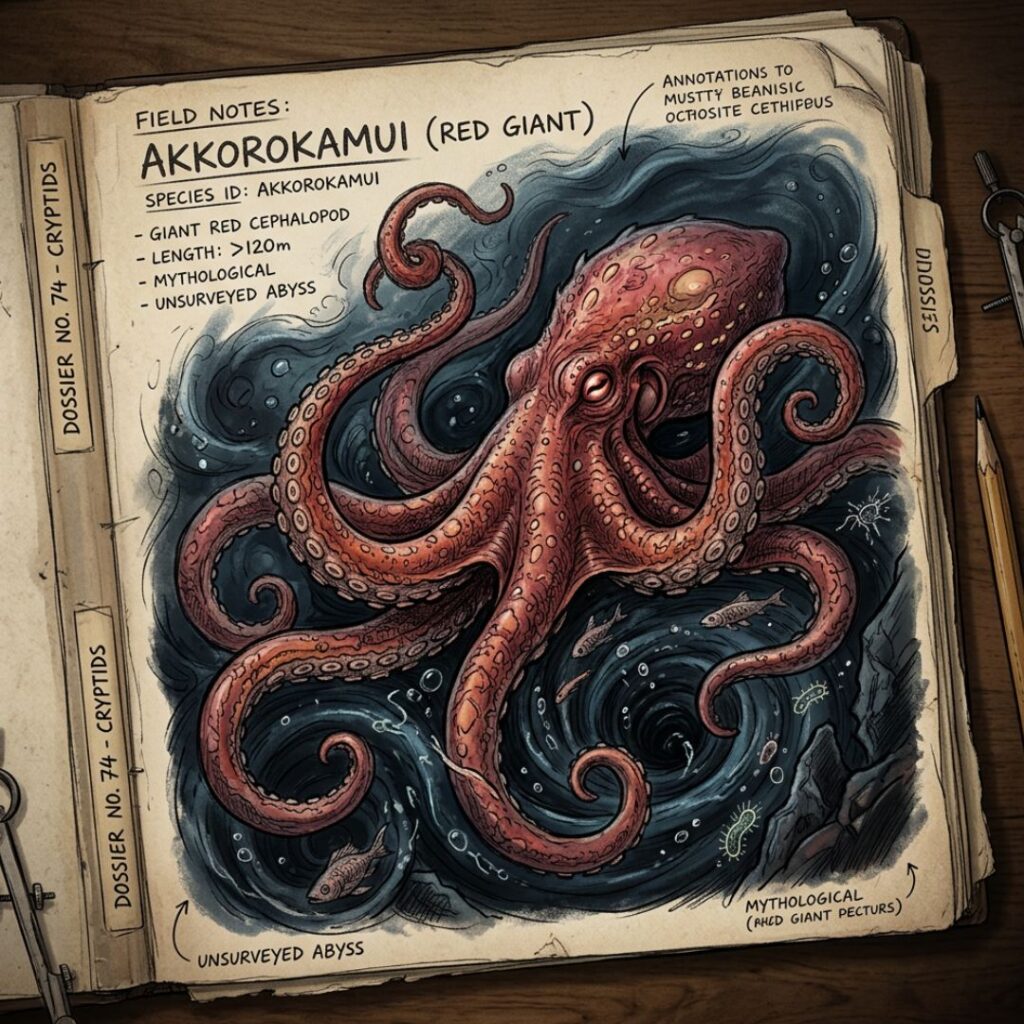
“When the sea turns the colour of an open wound, you do not ask what caused it. You take your boat out of the water. You go home. You do not look back at the bay.“ — Attributed to Setsu Kawakami, Ainu fisherwoman, Toyako district, collected account, 1934.
Classification Status: Active Theological Entity — Category 0 (Divine Being with Living Ritual Complex).
Region of Presence: Uchiura Bay (Funka Bay / Volcano Bay), southwestern Hokkaido, Japan.
Depth Range: Believed to inhabit the bay’s deepest volcanic channels, surfacing during periods of seismic or meteorological disturbance. Earliest Documented Western Account: John Batchelor, The Ainu and Their Folklore, 1901.
Ainu Designation: Atkor Kamuy — “string-possessing divine being” or “tentacle-holding god”.
Secondary Name: Ashketanne Mat — “Long-fingered Woman”.
Body Size (traditional account): One hectare when fully extended. Approximately 120 metres across.
Colour: Red. The colour of the sea when it appears. The colour of the sky above it when it moves.
Uchiura Bay has a second name that the tourist maps do not lead with. The Japanese call it Funka-wan. Eruption Bay. Western cartographers who first documented it in the late eighteenth century named it Volcano Bay, because the volcano Mount Usu was actively erupting when they arrived. The shoreline is ringed by volcanic peaks — Usu, Komagatake, and the remnants of older calderas now softened into hills by centuries of weather. The bay itself sits in a geological depression surrounded on three sides by the Oshima Peninsula, a curved arm of land that traps the water and gives the bay an enclosed, almost enclosed quality — a cauldron shape, if you are the kind of person who notices such things.
The water here marks the junction between two entirely different ocean systems. To the north, the cold arctic waters that surround the upper reaches of Hokkaido and extend into the Russian Far East. To the south, the more temperate Pacific marine ecosystem that governs the rest of Japan’s coast. Cold and warm meet in Funka Bay and produce something richer than either — a density of marine life fed by the collision of different currents, different temperatures, different nutrient regimes. The bay holds flounder, lamprey, shellfish, salmon, scallop beds maintained by fishing communities for generations, and species that drift in from both north and south depending on the season.
It also holds something that the Ainu have known about since long before any map was made of this coastline.
They call it Akkorokamui. They know where it lives. They know what it looks like when it moves. And they know, with the specific precision that comes from thousands of years of fishing the same waters, exactly what to do when the bay turns red.
Part I: The Named Land
Before anything else can be understood about Akkorokamui, you need to understand what the Ainu word kamuy actually means. Not what it translates to — every translation is imprecise — but what it is.
The Ainu are the indigenous people of Hokkaido. They called their island Ainu Mosir — the Land of Humans — and they inhabited it, along with Sakhalin and the Kuril Islands, for thousands of years before any map marked the territory as Japanese. Their language bears no relation to Japanese. Their spiritual tradition is entirely their own. In the Ainu worldview, kamuy are not gods in the way the word is typically understood: remote, elevated, requiring mediation to approach. Kamuy are the spiritual substance of the living world. Every animal, every river, every fire, every mountain carries a kamuy. When you fish a salmon, the salmon’s kamuy has come to visit the human world. When you hunt a bear, the bear’s kamuy has come in animal form, bringing food and fur as a gift. The transaction is reciprocal: humans receive the gift, perform the correct ceremonies, and send the kamuy back to their world satisfied. The kamuy returns and comes again next season.
This is not mythology in the casual sense of invented stories about things that do not exist. It is a working ecological framework for a community that survived for millennia in direct relationship with an extreme northern environment. The salmon run every year because the salmon kamuy is treated correctly and wants to return. The bear comes to the village because the Ainu community has earned its trust through generations of respectful ceremony. The relationship is maintained through conduct, and conduct has observable consequences. The framework works — it produced a stable, ecologically sophisticated culture across thousands of years of Hokkaido’s northern coast.
Ainu spiritual life centres on the concept of kamuy — beings with spiritual power that inhabit natural phenomena: bears, owls, salmon, fire, water, mountains. The relationship is understood as reciprocal between humans and the natural world. When an animal is hunted, the spirit is believed to be visiting the human world in physical form. Treating it with respect ensures the kamuy returns satisfied and will visit again.
Into this framework, Akkorokamui fits precisely. It is the kamuy of the sea — not of fish, not of fishing, but of the bay itself, of the water in its full depth and totality. Repun Kamuy governs the ocean broadly; Akkorokamui governs this bay specifically. She is the resident divine force of Funka Bay in the same way that a salmon kamuy is the resident divine force of a particular river. To fish the bay is to operate in her territory. To be on the water at the wrong moment is to be present when she decides to surface. The scythe that fishermen carried was not an act of defiance. It was preparation — the same calm preparation you apply to every risk in a world where risk is constant and acknowledged.
“My grandfather said the bay was hers. He didn’t say it like it was a legend. He said it the way you say a field belongs to someone who has farmed it longer than you have been alive. A fact of the land.“ — Attributed to Hiroshi Ueda, Ainu community elder, Noboribetsu, collected account, 2009.
◈ DOSSIER FILE: AKKOROKAMUI
Atkor Kamuy — “The One Who Holds the Bay”
[Darkmyths Classification: Category 0 — Living Divine Entity with Active Ritual Complex and Physical Warning System]
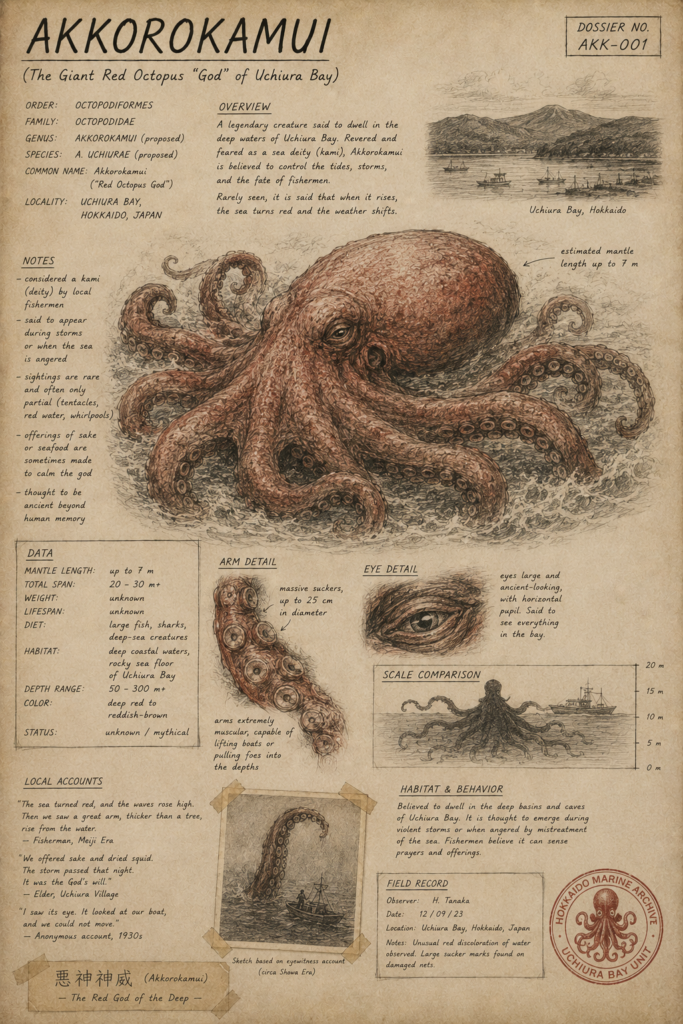
PHYSICAL PROFILE
Akkorokamui is red. This is the first and most important detail. Not the dark red of dried blood or the brown-red of rust, but red in the way a sunset reflected on open water is red — saturated, luminous, moving. When she extends herself across the surface of Funka Bay, the water turns the colour of her body. The sky above turns the same colour, catching the light that her mass reflects upward. The bay becomes a warning signal visible from the shore, from the cliffs, from the fishing villages along the Oshima Peninsula. Red water means she is present. Red sky confirms it. Everyone who grew up on these shores knows what to do.
Her body is described in the tradition as reaching one hectare when fully spread — roughly the size of two football pitches laid side by side. The arm span alone is estimated in the oldest accounts at 120 metres. This scale exceeds any cephalopod that currently exists on record. It does not exceed what the deep ocean is capable of producing, nor what the fossil record suggests has existed. The Hokkaido seafloor holds the remains of Cretaceous-era cephalopods — fossil beaks and jaws found in rock formations on Hokkaido that suggest cephalopod species of extraordinary size existed in the seas that once covered this region, a fact the Ainu tradition predates but seems to remember.
She has eight arms, and the precision of that number matters. The Ainu name Atkor Kamuy means “string-possessing god,” referencing the tentacles as strings or cords — the extensions of her will into the water around her. The secondary origin account specifies that the garment which transformed into her was braided from exactly eight cords of cloth. The octopus has eight arms. The number was noticed. The tradition encodes it.
The alternate name — Ashketanne Mat, the Long-fingered Woman — acknowledges the female-human dimension of her form. She is not only a cephalopod and not only a goddess. She is also, in the deeper layers of the tradition, a woman. The arms are fingers. The scale is the horror and the majesty simultaneously: a woman whose hands reach 120 metres.
THE RED PHASE AND THE DEEP PHASE
Darkmyths has identified two behavioural states described across the full body of Ainu accounts, which we term the Red Phase and the Deep Phase.
The Red Phase is active and visible. She rises toward the surface, her body illuminating the water from below with that extraordinary crimson colour. The warning signs arrive in sequence: first the water changes colour at the deepest point of the bay’s main channel, then the discolouration spreads outward toward the shore, then the sky above the spreading red reflects it back. From first sign to full display, experienced bay fishermen report a window of approximately twenty to forty minutes — time enough to reach the shore if you are already moving.
The cause of the Red Phase in the tradition is anger, or more precisely, disturbance — the same word covers both in the Ainu account. Akkorokamui rises when the bay’s equilibrium is disrupted: excessive fishing, disrespectful behaviour on the water, volcanic activity in the bay’s geological substrate, or severe storm systems approaching from the Pacific. The last two are geologically significant. Funka Bay sits within an active volcanic landscape. Submarine volcanic venting can discolour seawater. Seismic precursors to volcanic eruptions produce measurable changes in deep water chemistry days before surface events. The tradition of watching for red water in a volcanic bay is, in the Darkmyths reading, an early warning system of considerable practical value — one that the kamuy framework makes reliably communicated across generations.
The Deep Phase is her resting state. She occupies the bay’s deepest channels, where the volcanic geology maintains warmer water temperatures than the surrounding ocean. She is present. She is not active. The fishing goes on, the boats go out, the scallops are harvested. She is accounted for, acknowledged, and left alone.
THE HEALING ATTRIBUTE
Among Akkorokamui’s documented characteristics, the healing power is the most philosophically rich and the least discussed in Western accounts. Because the octopus regenerates severed limbs — a genuinely remarkable biological capacity that Ainu fishermen who handled cephalopods would have observed directly — Akkorokamui is associated with healing injuries to the body, particularly broken bones, severed limbs, and serious physical trauma.
Shrines connected to Akkorokamui and the associated octopus deity appear throughout Japan — notably in Kyoto and across Hokkaido. These shrines, while named to different entities, share various characteristics with Akkorokamui, and practices involving healing, renewal, and purification are consistent across them. The wounded and the injured have come to these shrines for generations, bringing offerings to a sea creature they have never seen, requesting the regeneration that she demonstrates every time a predator takes one of her arms and she simply grows another.
This is extraordinary theological logic. The most dangerous entity in the bay is also the most powerful healer. Approaching her for healing is the highest-risk, highest-reward interaction available. Those who are desperate enough — who have no other option — make the approach. The tradition holds that she is more likely to heal than to harm someone who arrives at her threshold with genuine need and genuine respect. The same force that capsizes boats and swallows whales will restore a broken body, if asked correctly.
What the tradition is actually encoding, in Darkmyths’ analysis, is a principle about natural power: the sea does not distinguish between giving and taking. Both emerge from the same source, in the same motion. Akkorokamui does not choose to harm and also choose to heal. She is the bay itself. The bay feeds the community and kills fishermen who miscalculate. The healing and the destruction are the same attribute expressed in different conditions.
STATUS: Category 0. Active ritual complex. Living tradition. The shrines stand. The offerings continue. The bay is still red sometimes, and the boats still come in when it is.
Part II: What Fell Into the Water
There are two origin accounts for Akkorokamui, and the fact that both exist simultaneously in the tradition is itself informative. The Ainu did not typically require a single authoritative version. Two accounts of the same entity describe two aspects of the same truth.
The first origin account is older. In the mountains near the village of Rebunge, there lived a giant spider named Yaushikep. Her body was red and covered one hectare — already, in this older form, the specific scale that would define Akkorokamui. She descended from the mountains and attacked the village, shaking the earth, destroying everything in her path. The villagers prayed to Repun Kamuy, the god of the open sea. Repun Kamuy heard them and dragged Yaushikep into the bay. In the water, the great spider transformed. Her eight legs became eight arms. Her silk became ink. She became the octopus god and took the bay as her new territory.
The second origin is quieter and stranger. The goddess Kotan-kar-kamuy, injured, was nursed back to health by her husband. When the couple returned to the heavenly world, she removed her under-belt — a garment braided from eight cords — and cast it into the sea, because something worn in the earthly world cannot be taken into heaven. The belt, entering the water, transformed into Akkorokamui: eight cords becoming eight arms, a garment becoming a god, the intimate domestic object of a goddess becoming the lord of a bay.
The structural parallels between these accounts deserve attention. In both, something fundamentally terrestrial — a spider, a woven garment — enters the water and becomes something aquatic and divine. The transformation is always downward, always into greater depth, always accompanied by a shift from the personal to the territorial. Yaushikep was a threat to a village. Akkorokamui is the threat to the entire bay’s surface. The goddess’s discarded belt was an intimate object. Akkorokamui is anything but intimate.
The spider-to-octopus transformation is biologically resonant in a way that feels deliberate. Both have eight limbs. Both are ambush predators. Both produce substances from their bodies — silk and ink — that serve as weapons and tools. Both are capable of extraordinary stealth for their size. The Ainu tradition did not have access to comparative zoology, but it had access to direct observation, and the spider-to-octopus transformation reads as the observation that these two creatures, at opposite ends of the size scale, operate by the same predatory logic.
“She was not always the sea’s creature. She came from the mountains first. This is why she is angry sometimes. Part of her still remembers the land.“ — Attributed to Mika Sashima, Ainu cultural practitioner, Shiraoi, collected account, 2014
◈ DOSSIER FILE: FAUNA OF FUNKA BAY
The Real Creatures of Akkorokamui’s Territory
[Darkmyths Fauna Profile — the living inhabitants of Uchiura Bay and what they suggest about what might be possible]
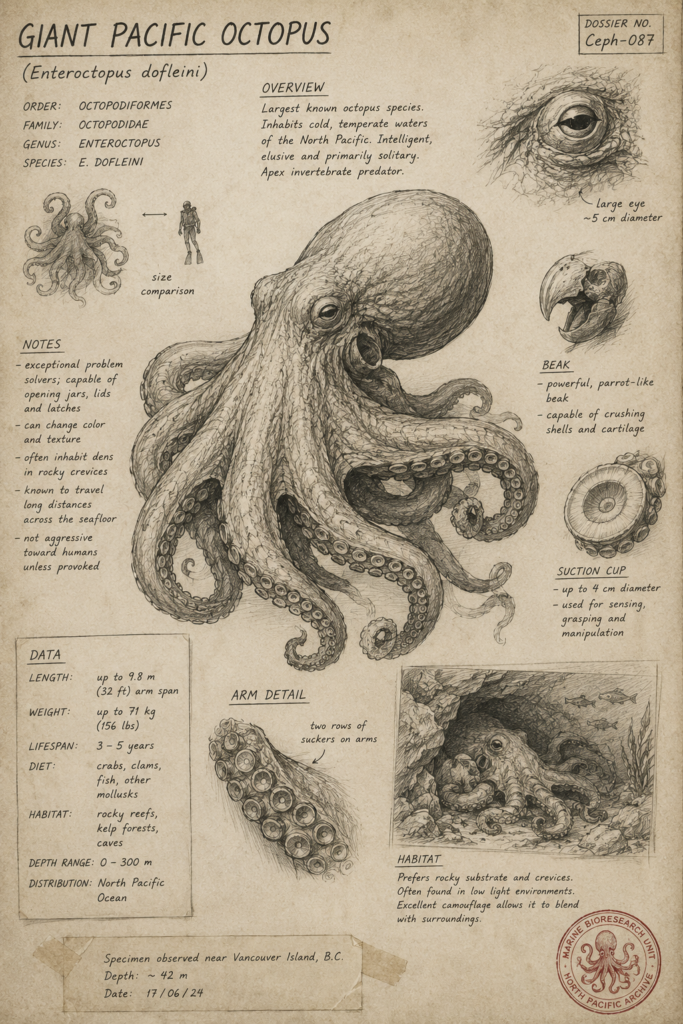
GIANT PACIFIC OCTOPUS (Enteroctopus dofleini)
The largest octopus species on earth lives in the waters around Hokkaido. The giant Pacific octopus has an arm span of up to five metres and can weigh fifty kilograms, with unverified accounts of considerably larger specimens. It is found throughout the coastal north Pacific, including Japan, and is known to display a red colouration, although it can change its pigmentation to blend into its environment. It is intelligent — demonstrably so, by any reasonable measure of the word. It solves problems, recognises individual humans it interacts with repeatedly, and has been documented escaping from sealed containers by unscrewing lids from the inside.
The giant Pacific octopus is the plausible biological basis for every Akkorokamui account. It lives in these waters. It is red when not camouflaged. It is large enough to be dramatic and intelligent enough to behave in ways that read as deliberate. It would not be unusual to find one in Funka Bay. However, it is usually found at depths of over 200 feet — it surfaces rarely and on its own terms. The gap between a five-metre octopus and a 120-metre deity is enormous. But the gap between no octopus and a very large, red, intelligent one is what generates traditions. The tradition started somewhere real.
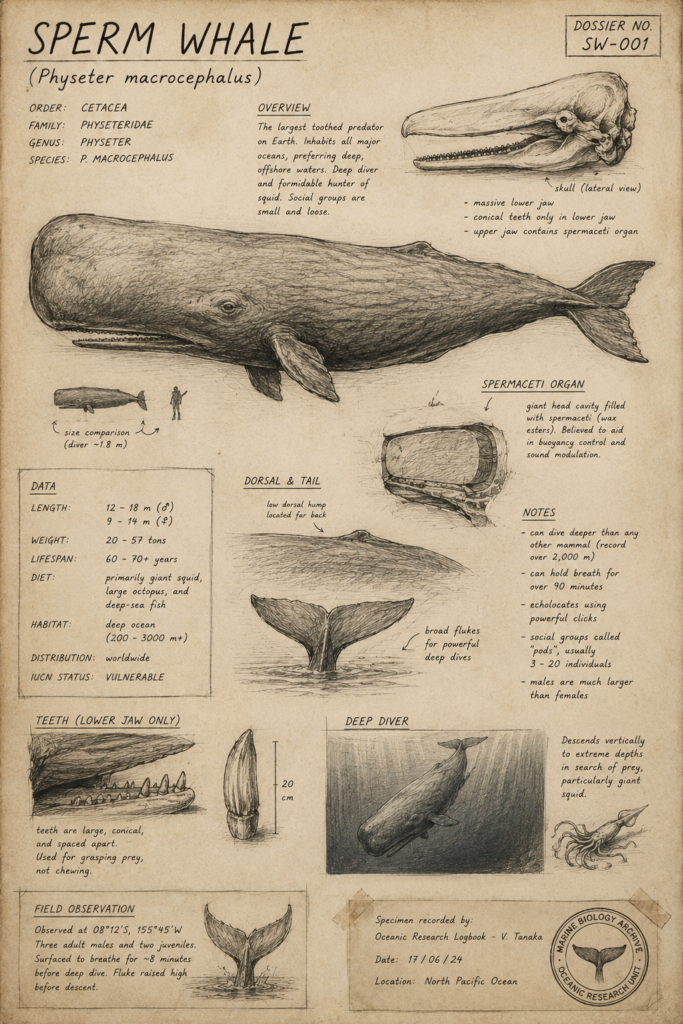
SPERM WHALE (Physeter macrocephalus)
The accounts describe Akkorokamui swallowing whales. The sperm whale is the largest toothed predator on earth — adults reach eighteen metres, dive to depths of over two kilometres, and produce sounds so powerful they can stun or kill prey. They are documented in waters off Hokkaido, feeding in the cold nutrient-rich currents of the northwestern Pacific.
A sperm whale is enormous by any measure relevant to a fishing boat crew. The idea of something large enough to swallow a sperm whale is a statement about scale that the tradition reaches for to establish that Akkorokamui operates in a different category entirely from any animal the fishermen might otherwise encounter. The sperm whale is the largest thing they know. Akkorokamui eats it. This is not description — it is theology establishing hierarchy. She is above the largest creature in the ocean. Everything in the bay is below her.
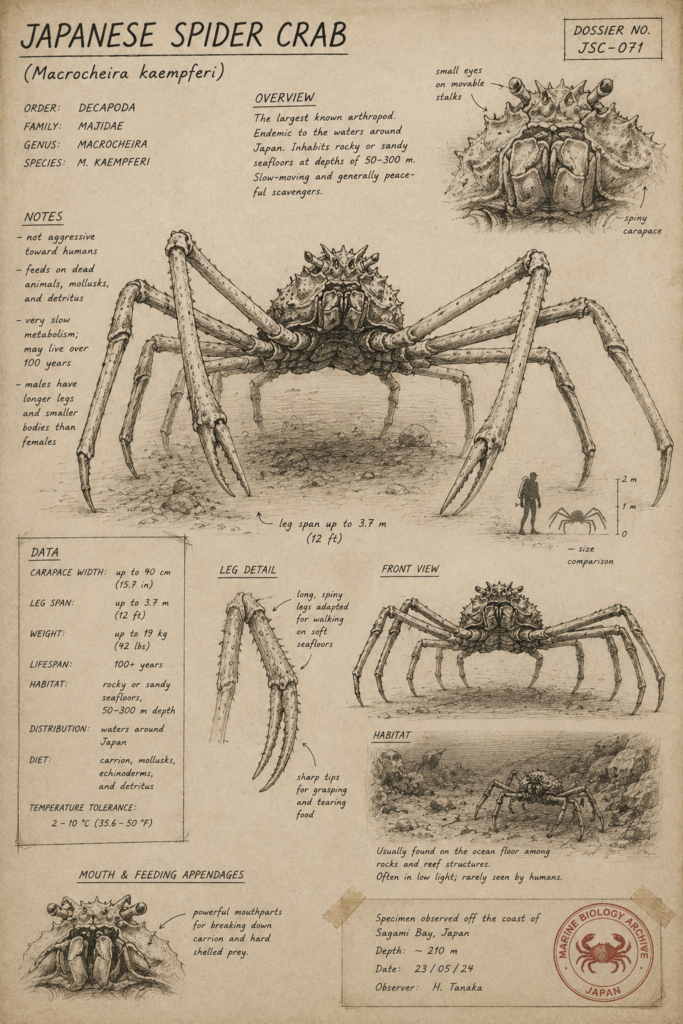
JAPANESE SPIDER CRAB (Macrocheira kaempferi)
The Japanese spider crab is the world’s largest arthropod, with a leg span reaching up to 3.7 metres. It is found primarily in the deep waters off the Pacific coast of Japan, including waters around Hokkaido. Its legs are improbably thin relative to their length, giving the creature the appearance of something designed more for existential disturbance than practical locomotion. It is closely related, in form and in ancestral lineage, to the spider.
The presence of the Japanese spider crab in the waters beneath Funka Bay is a piece of information the Ainu tradition may have known and may have encoded in the Akkorokamui origin story. The mountain spider becomes the bay’s octopus god. The largest spider-shaped creature on earth lives in the depths of the same bay. The tradition connects spider and sea-creature explicitly. The biology confirms that the connection is real, even at a scale that makes it easy to miss.
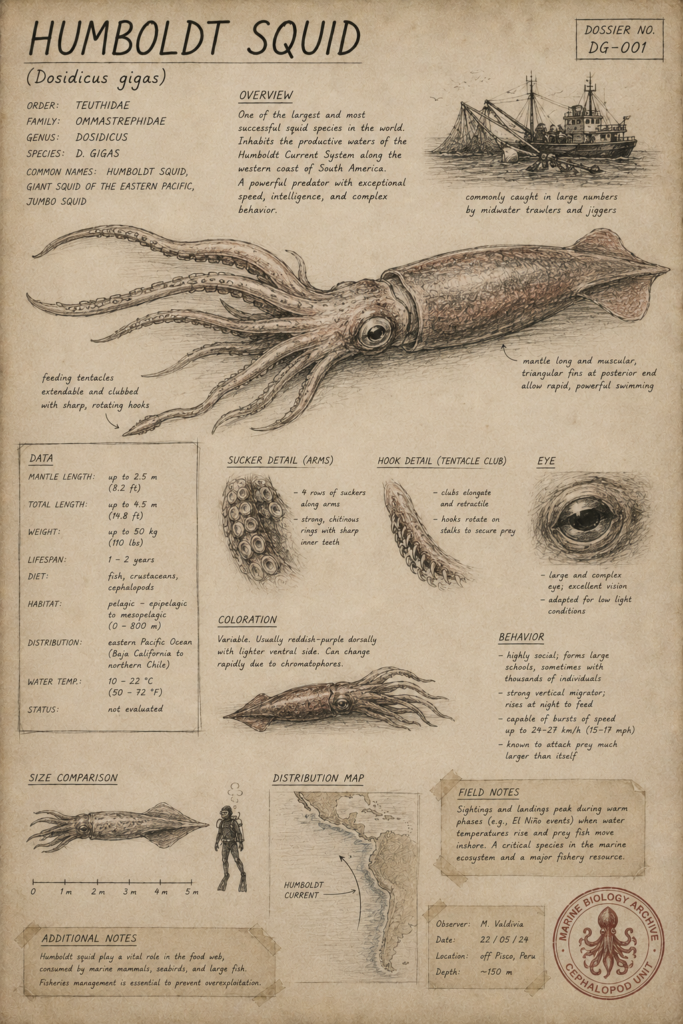
HUMBOLDT SQUID (Dosidicus gigas)
The Humboldt squid reaches two metres in length and is the most aggressive cephalopod known to science. It hunts in groups, communicates through rapid bioluminescent colour changes, and has been documented attacking adult humans in the water. It is not a Hokkaido resident — its primary range is the eastern Pacific — but periodic range expansions associated with shifting ocean temperatures have brought Humboldt squid into the northwestern Pacific. They represent what a cephalopod apex predator looks like when the restraint of normal behaviour is removed. In the waters under Funka Bay, where cold arctic and warm temperate currents collide, the ecological conditions for unusual fauna are present. Akkorokamui may be one entity. The waters she governs contain many.
THE RED TIDE
Funka Bay is subject to algal blooms — rapid proliferations of microscopic marine algae that, under certain conditions of temperature, nutrient concentration, and current, turn the water visibly red. Red tide events are real, documented, and potentially toxic: certain algal species produce compounds that kill fish, contaminate shellfish, and are dangerous to humans. The bay turns red. The fishing stops. Anyone who has lived on this coast long enough knows that red water means something is wrong with the sea.
Whether the Akkorokamui warning system — red water means leave the bay — originated from encounters with an actual enormous cephalopod, from red tide events that predictably preceded conditions dangerous to fishermen, from volcanic mineral discolouration of seawater, or from all three simultaneously is a question the tradition was never asked to answer. It encodes the outcome: when the water turns red, the bay is not safe. The mechanism is less important than the behaviour it produces. That behaviour has kept fishing communities alive on this coast for thousands of years.
Part III: The Scythe Protocol
John Batchelor, an Anglican missionary who worked with the Ainu people from the 1870s through the early twentieth century and produced the first substantial English-language account of Ainu culture and mythology, included the following in his 1901 record of Akkorokamui:
“Three men, it was said, were out trying to catch swordfish, when all at once a great sea monster, with large staring eyes, appeared in front of them and proceeded to attack the boat. A desperate fight ensued.”
The men survived, in this account, because they were carrying the tools of their trade — sharp cutting implements designed for working with fish, rope, and catch. The scythe — or more precisely, the broad-bladed cutting tool that Ainu fishermen routinely carried at sea — was the prescribed protection against Akkorokamui. Not a weapon of aggression. A tool of severance. If a tentacle comes over the side of the boat, you cut it. The octopus will retract. The arm will regrow. She will not be killed and she will not be permanently harmed, but the immediate threat will be addressed and the boat may survive.
This protocol is philosophically precise in the context of the kamuy worldview. You do not try to kill Akkorokamui. You do not fight her on equal terms, because equal terms do not exist. You acknowledge her power, carry the one tool that addresses the immediate problem, and conduct yourself in the hope that the engagement is brief. The scythe is not confidence. It is the minimum viable preparation for an encounter with something that cannot be defeated.
In the same way that the Ainu hunter does not go into the forest pretending the bear does not exist, the Ainu fisherman does not go onto Funka Bay pretending Akkorokamui does not exist. The bear is real. The bay is real. The things that live in them are real. The correct response to real things is preparation and respect, not denial.
“My father always had his knife sharp before he took the boat out. I asked him once why he sharpened it specifically, not just as a routine. He said: because if you need it, you will not have time to think about whether it is ready. The bay does not wait.“ — Attributed to Kenji Oura, fisherman, Toyako, collected account, 2017
◈ DOSSIER FILE: THE BAY — FUNKA-WAN
Volcano Bay — The Geography of a God’s Home
[Darkmyths Geographic Profile — the physical territory of Akkorokamui]
THE SHAPE OF THE BAY
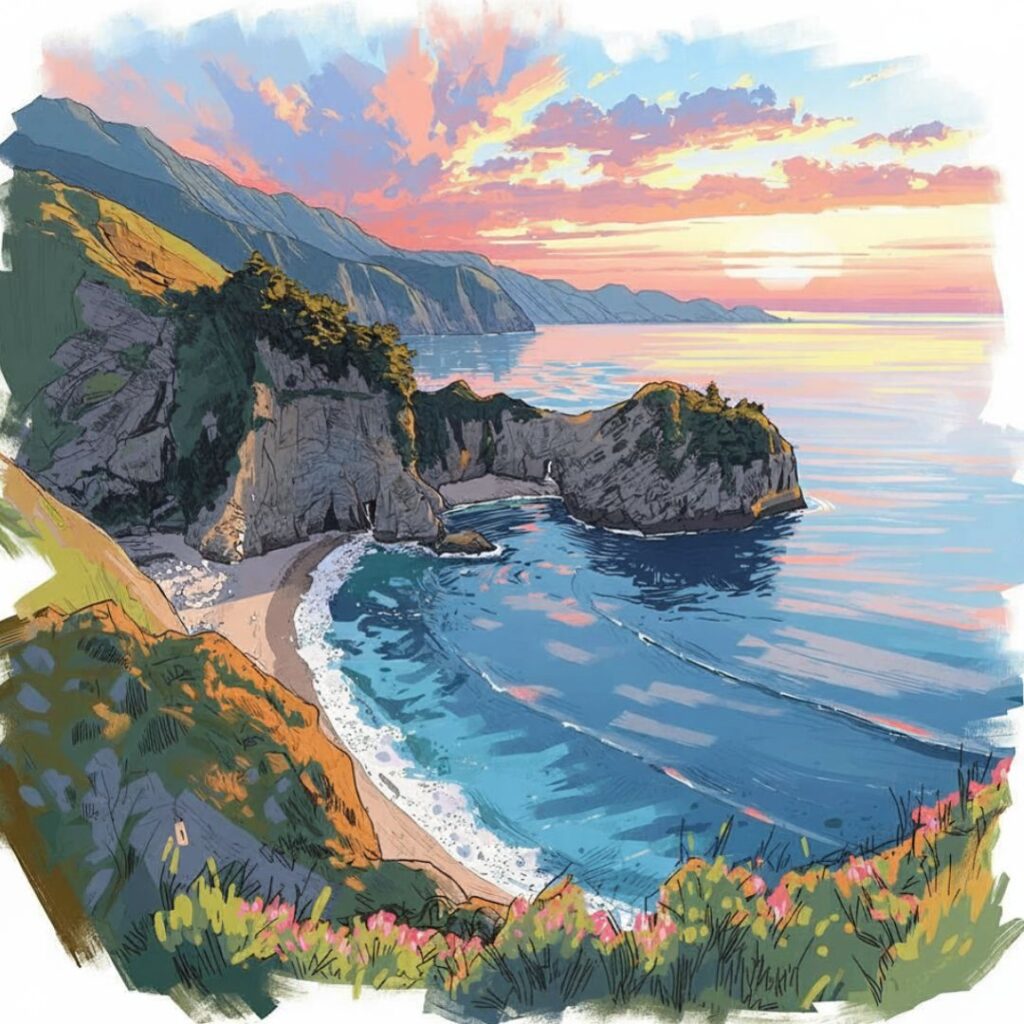
Uchiura Bay covers 2,485 square kilometres and has an average depth of 93 metres. Its mouth opens southeast toward the Pacific, while the rest of its circumference is enclosed by the Oshima Peninsula and the volcanic highlands behind it. This enclosed shape means the bay has its own weather patterns, its own current dynamics, its own relationship to the tides that differs from the open ocean beyond its mouth. When the Pacific sends swells in through the bay’s entrance, they travel differently inside than outside. When storms develop over the bay’s surface, they are contained and concentrated by the surrounding land. The bay behaves like a room that happens to be full of ocean.
The volcanic geography under the bay’s floor gives it geological properties found nowhere else on Japan’s Pacific coast. Submarine venting from the volcanic system beneath the Oshima Peninsula influences deep water temperature, chemistry, and visibility. The bay marks a junction between the arctic sea life seen in the waters surrounding northern Hokkaido and eastern Russia and the more temperate marine ecosystem seen around the rest of Japan. The result is a layered water column: cold, arctic-origin water in the depths, warmer temperate water above it, with a thermocline between them that creates conditions unusual enough to support fauna not found in either parent ecosystem alone.
Akkorokamui is described as inhabiting the deepest channels of the bay — the volcanic depths where the water is warm and dark and under pressure. In these channels, the Darkmyths profile holds, she spends the Deep Phase of her existence. The volcanic vents are her hearth. The cold-arctic thermocline above her is her ceiling. The bay is not simply her territory. It is, in the fullest sense, her house.
MOUNT USU AND THE VOLCANIC RING
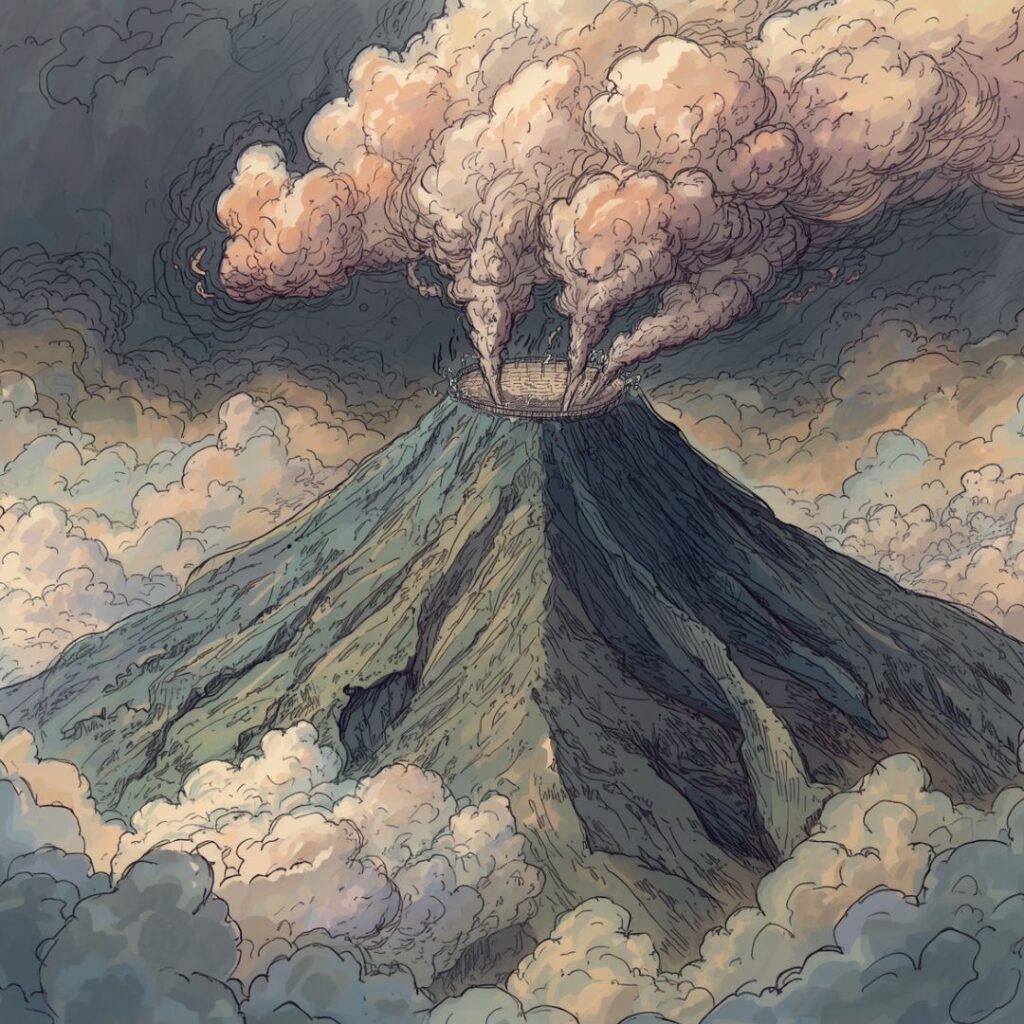
Mount Usu — one of Japan’s most active volcanoes, erupting most recently in 2000 — stands on the southern shore of Funka Bay. Its eruptions have reshaped the bay’s shoreline repeatedly. The 1977 eruption created new land. The 2000 eruption forced the evacuation of 16,000 people. The mountain is not dormant background scenery. It is an active participant in the landscape.
When Usu erupts, the bay responds. Submarine volcanic venting increases. Water chemistry changes. Deep currents shift. The bay turns colours it does not normally turn. And in the Ainu tradition, major volcanic events at Usu are associated with Akkorokamui’s most significant documented appearances — the creature surfacing in concert with the mountain’s activity, as though the geological disturbance and the entity’s behaviour share a common cause.
The shared cause, in the Darkmyths reading, is the volcanic system itself. The same geological activity that makes Usu erupt makes the bay floor vent. The water chemistry changes that precede a surface volcanic event first manifest as changes in the deep channel water where Akkorokamui lives. She rises because her home has changed. The mountain erupts because the same pressure that changed her home has found its outlet at the surface.
Akkorokamui and Usu are symptoms of the same geological event. The tradition noticed this synchrony and encoded it as relationship. In the Ainu cosmology, that encoding is accurate. The volcano and the sea creature are not separate phenomena. They share a root.
THE FISHING VILLAGES
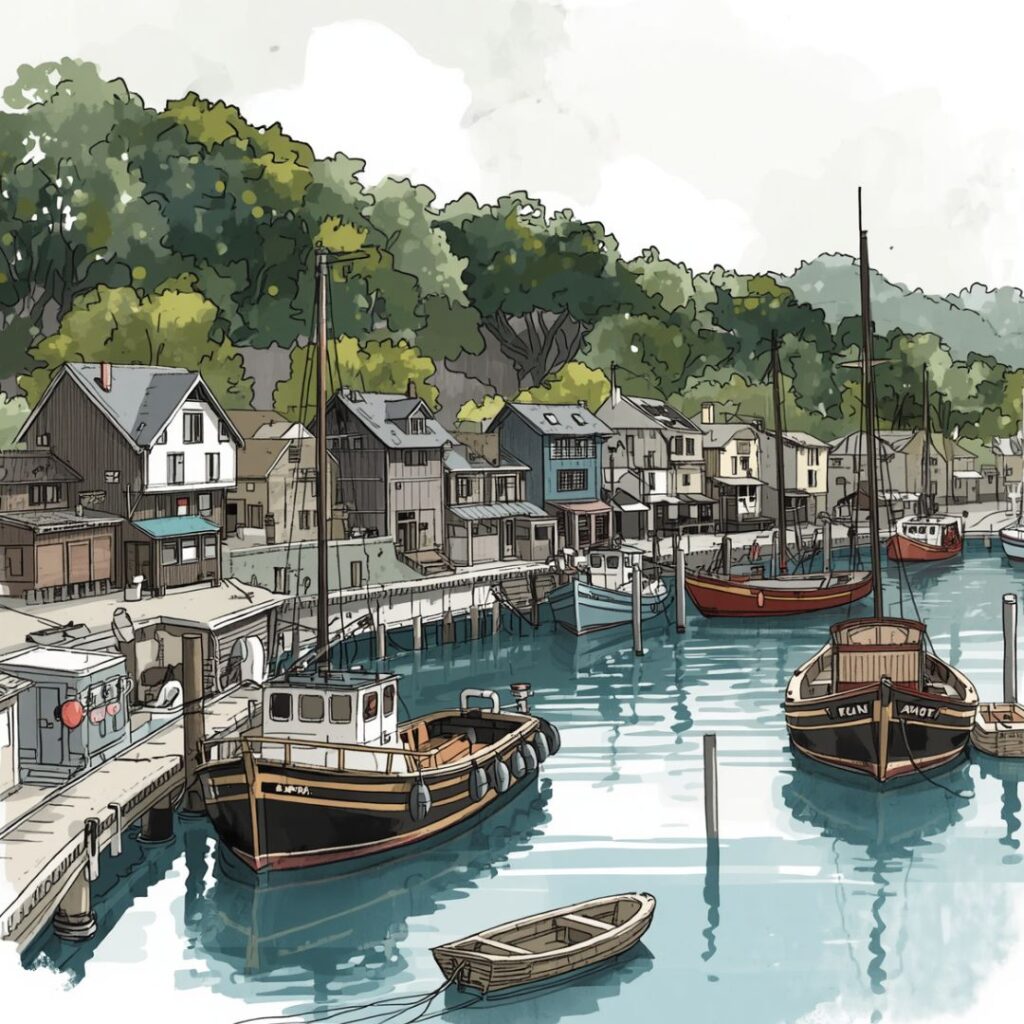
The communities along Funka Bay’s shore — Toyako, Sobetsu, Noboribetsu, Date — have been fishing the bay’s waters since the Jōmon period, with the shoreline first settled as early as 4000 BCE. Six thousand years of continuous human presence on a bay whose resident divine entity is an enormous red cephalopod god. Six thousand years of watching the water for the colour change. Six thousand years of scythes in the boat.
The living communities maintain the ritual complex around Akkorokamui not as heritage performance but as active practice. The shrines associated with the healing attribute receive regular offerings. The prohibition on fishing when the water turns red is observed. The scythe tradition has modernised in material — fishermen use different cutting tools now — but the principle persists. You carry something that can sever a tentacle. You go out. You come back.
◈ DOSSIER FILE: THE SEASCAPE — ECOLOGY OF THE RED WATER
What Lives in Akkorokamui’s Bay and Why the Colour Matters
[Darkmyths Botanical and Ecological Profile — the living environment of Funka Bay]
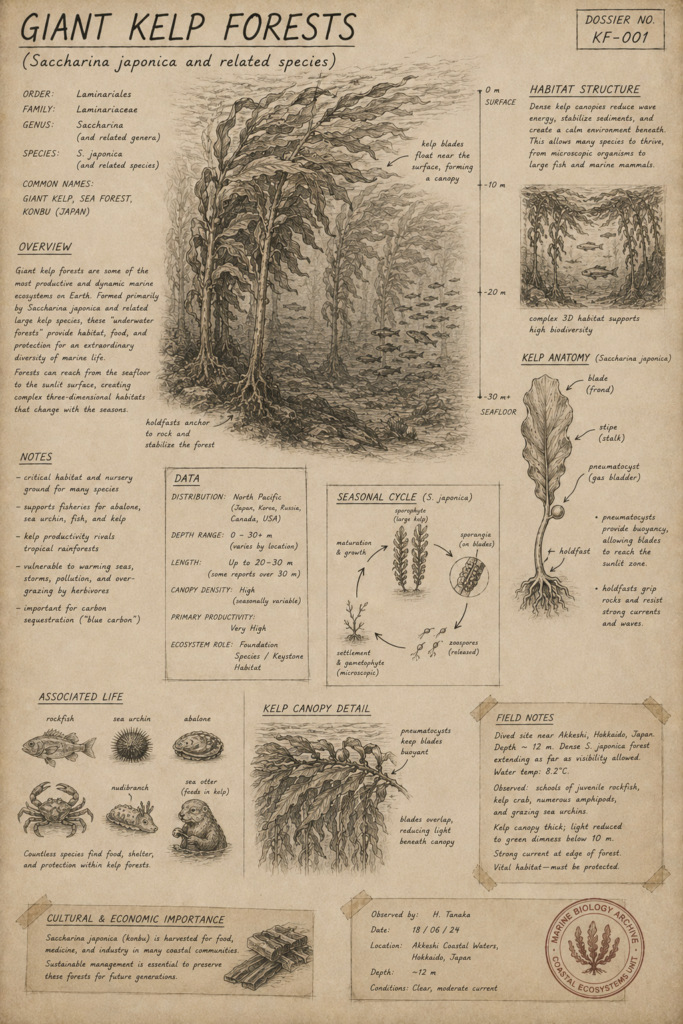
GIANT KELP FORESTS (Saccharina japonica and related species)
The cold nutrient-rich waters of Funka Bay support extensive kelp forests along the bay’s rocky margins and shallower approaches. Japanese kelp — konbu — is harvested here commercially and has been a staple of the Ainu diet and trade economy for centuries. The kelp forests are among the most ecologically rich habitats in any marine environment: three-dimensional, vertically structured, supporting thousands of species across their layered canopy, midwater, and seafloor zones.
In the Akkorokamui tradition, the kelp forest is the zone between the known and the unknown — the point where the seafloor becomes visible from above but the water below the kelp canopy remains dark. Fishermen working the kelp margins describe a specific quality of attention they maintain there, a watchfulness that is not present in the open bay. The kelp does not hide Akkorokamui — nothing hides something a hectare across — but it marks the boundary of the zone where the bay’s depth begins to matter, where the thermocline sits, where the transition from the human world’s reach to the bay’s own depths begins.
VOLCANIC MINERAL WATER
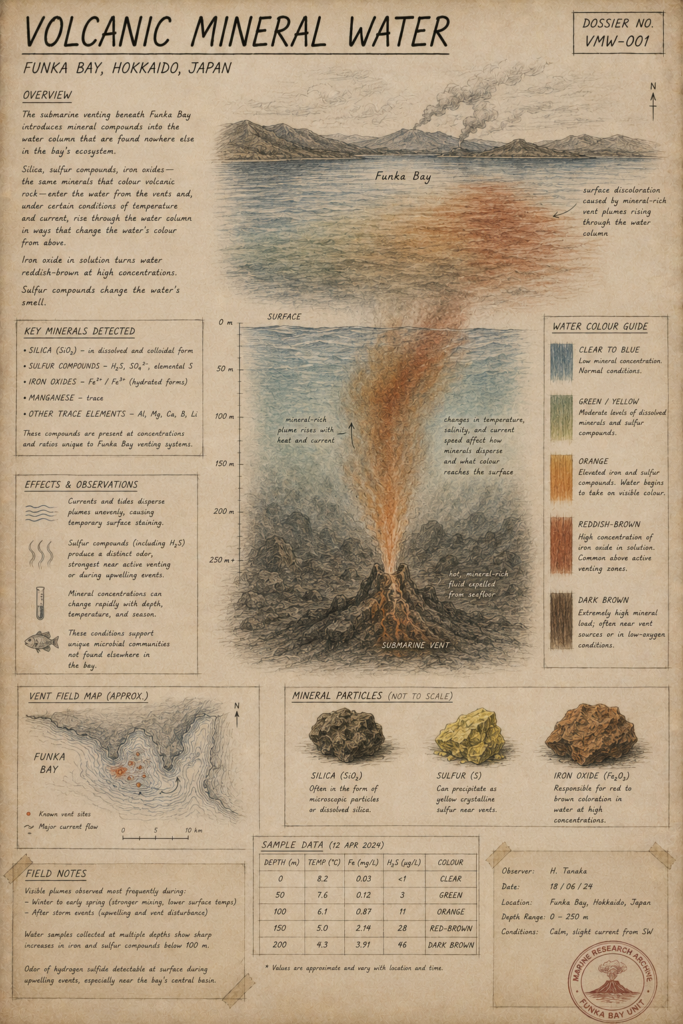
The submarine venting beneath Funka Bay introduces mineral compounds into the water column that are found nowhere else in the bay’s ecosystem. Silica, sulfur compounds, iron oxides — the same minerals that colour volcanic rock — enter the water from the vents and, under certain conditions of temperature and current, rise through the water column in ways that change the water’s colour from above. Iron oxide in solution turns water reddish-brown at high concentrations. Sulfur compounds change the water’s smell.
The red water warning that signals Akkorokamui’s presence may be, in part, a volcanic mineral plume rising from the bay floor — a geochemical event that precedes larger geological activity, visible at the surface as a colour change, and accurately associated in the tradition with conditions dangerous to small boats. Volcanic mineral plumes that precede submarine seismic events produce choppy, unpredictable surface conditions. The boats come in. The bay settles. The plume dissipates. Whether Akkorokamui caused it or was disturbed by the same event that caused it, the outcome for the fisherman is identical.
THE SALMON RUN
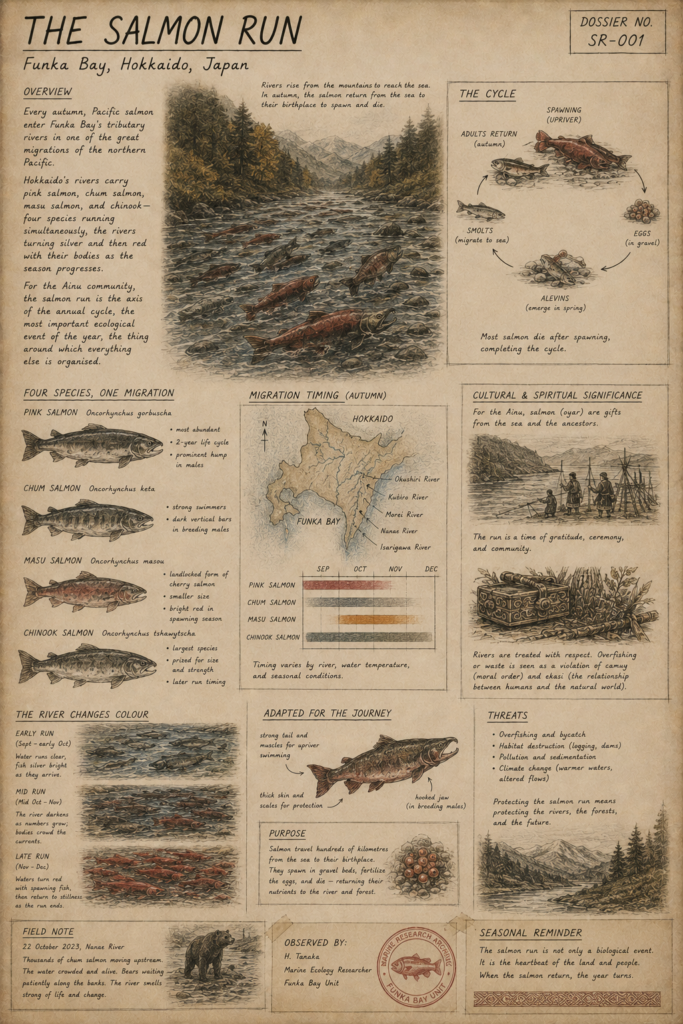
Every autumn, Pacific salmon enter Funka Bay’s tributary rivers in one of the great migrations of the northern Pacific. Hokkaido’s rivers carry pink salmon, chum salmon, masu salmon, and chinook — four species running simultaneously, the rivers turning silver and then red with their bodies as the season progresses. For the Ainu community, the salmon run is the axis of the annual cycle, the most important ecological event of the year, the thing around which everything else is organised.
Akkorokamui, as the bay’s kamuy, is implicitly present at the salmon run’s entry point — the mouth of the bay where the salmon first arrive from the open Pacific. The tradition holds that respectful behaviour on the bay during the salmon season is especially critical. The sea deity and the river deity whose salmon she is allowing into the bay are in conversation at the bay’s mouth each autumn. Humans are witnesses to an exchange between kamuy. Their behaviour during this period is noted by both parties.
Part IV: The Red Morning
The composite account below comes from five witnesses across three generations of Funka Bay fishing communities. The accounts were collected between 1934 and 2019. None of these people knew each other. The structural details they share are italicised.
In each account: the witness is on the water before dawn, in the deepest section of the bay, where the channel runs darkest under the hull. In each account: the colour change begins beneath the boat — not at the surface, not from a direction, but from below, as though the light source that produces it is ascending. In each account: the water turns colour faster than any known marine phenomenon produces a visible change — not gradual, not spreading from a point, but present all at once across the visible surface, as though a decision was made.
What is consistent after that: the witness does not panic. Every one of these five accounts describes the same first action — moving the boat toward shore, steadily, without rushing, watching the water’s colour deepen around them as they go. None of them ran. None of them froze. They moved at the pace that a person moves when they know what is happening, have prepared for it, and are executing a protocol they have rehearsed in their minds since childhood.
“The water was red. Not like blood — that description is always wrong, it sounds wrong from people who have not seen it. It was red like the inside of something alive. Like the bay had a temperature you could see. I put the motor up so the propeller wouldn’t catch anything and I paddled in. I did not look over the side. I had been told not to look over the side. I do not know what I would have seen if I had.” — Tomoko Hayashi, Toyako, 2019.
She made the shore. The water was red until midmorning. By afternoon it had cleared. She went back out the following day.
The bay does not confirm Akkorokamui. It does not need to. The water turns red on its own schedule, on this coast that has been inhabited for six thousand years, in this bay that the Ainu named the god’s home before the word Japan had any meaning at all. The shrines receive their offerings. The scythes are sharpened. The boats go out.
The deep channels stay dark, and in them, something the size of a hectare turns the colour of fire, and waits.